The month is over. The sales were excellent and the P&L was profitable and there was no sign of anything that appeared to be terribly in error.
You should then check the restaurant’s bank account.
The number is not exactly what you’d hoped for.
Restaurant owners can find this disconnect frustrating as they believe profits and cash flow should be identical. But they don’t. A P&L measures the financial performance of a company over time in time, whereas your bank account shows the actual timing of money moving in and out of the company.
Understanding the differences will help restaurant owners adjust their perception of restaurant financials.
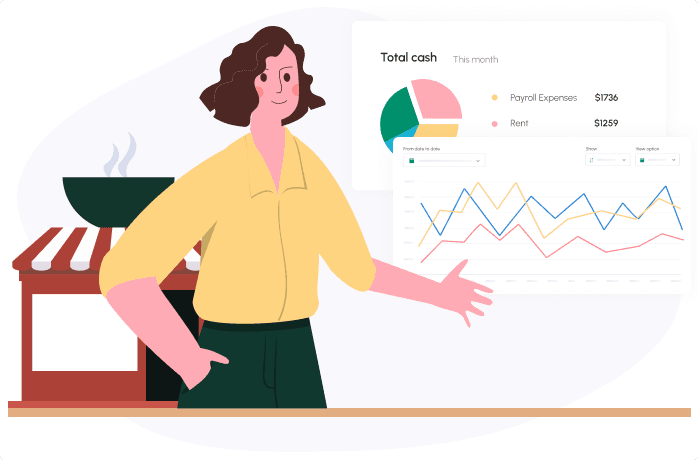
Take a look at what happens during an ordinary week. Customers pay for meals. Employers must be paid. Deliveries of food and beverages arrive with invoices attached. Rent is getting closer. Credit card deposits come with their own schedules. Sales tax is an obligation.
Already, the next week’s purchases have started.
Focusing on revenue only or the final profit figure isn’t a good way to assess the full scope of what happens.
The key may lie in the price of the best.
When the profitability of restaurants starts to change in the negative direction, then food, drinks and labor costs need focus.
The prime cost is comprised of both items and labour. The Bookkeeping Chefs’ provided instructions place the main cost between 60 and 65 percent of the revenues for a variety of establishments. They also emphasize regular monitoring of the week instead of waiting until the month ends.
Effective management of prime costs requires less focus on a single percentage and more attention to the early changes.
Imagine that the restaurant normally achieves its goals, however this week it’s more of a percentage. Perhaps overtime was increased. The cost of drinks could have remained the same, whereas food costs rose. The manager can review menus as well as waste, portions sizes or vendor invoices, as well as purchasing if the proportion of food is greater.
The percentage is a source of concern. The activity of the restaurant itself provides the answer.
Weekly reports allow for this conversation to take place even though everyone is aware of what’s transpired.
The details are more difficult to recall after a couple of days.
When the vendor bills arrive
The restaurant will pay later for the food items it buys. This explains why profits alone won’t be able to answer every cash question.
Vendor invoices must be received and logged. Doing this manually in an office with many suppliers can be a massive administrative burden.
Automating the process for accounts payable can streamline this process by reducing the repetitive handling of payments and bills. The bookkeeping system that is connected to the internet can give the user a better picture of debts which haven’t yet deposited into the account of the bank.
It’s beneficial because, when considered as a whole the bank balance of a restaurant could appear to be more healthy than its actual financial situation.
Today, there may be $80,000 on the account. The $80,000 amount is tiny if rental, vendors or payroll are to take the majority of the next few days.
That leads naturally to cash flow forecasting.
Instead of asking “How much cash do we have?” the better question is “What is going to occur to our cash after the money we’re expecting to receive and the obligations we already know about?”
The distinction could be important when deciding if it is an appropriate time to upgrade equipment, make an extra purchase, or keep the liquidity.
The money you receive may Not Be Yours
Sales tax illustrates this in particular.
Restaurants get money from customers, which they deal with according to the tax requirements. If the funds are combined with normal operating cash, then the balance in a bank can be misleading about the amount of money available.
The consistency of the records helps restaurants comply with sales taxes while giving the management a realistic view of their financials.
This is the reason that restaurant accounting is more efficient when financial obligations aren’t thought of as separate entities.
Prime cost affects margin. COGS (cost of goods sold) and future payments are impacted by the purchases made by vendors. Payroll is a factor that affects both cash and labor percentage. Sales tax impacts cash availability. P&Ls are used to record financial performance. Forecasting is also beneficial to management.
The pieces are interconnected.
Bookkeeping Chef is a restaurant-specific report that integrates and system integrations. Outsourced bookkeeping services that are specifically tailored to your needs are an excellent option for owners who don’t have the time to manually reconcile financial data. They are able to handle the bulk of the accounting tasks without taking the owner away from the financial conversation.
The final part is crucial.
It’s not our goal for restaurant owners to stop checking their books just because someone does. It’s crucial that the owners get information so they are aware of what’s happening.
If the P&L shows that the establishment is profitable however, the balance in the bank feels too tight, don’t think the P&L may be inaccurate.
Find out what transpired between you and your spouse.
This one question could teach you more about your restaurant than any other number could on its own.