Surface finishing has evolved into a precision driven engineering procedure. In the manufacturing world of the present, the quality of coatings is directly related to the durability, resistance to corrosion, and perception. As global standards tighten and clients demand perfect finish, many factories are turning to robotics for painting to achieve greater control and consistency.
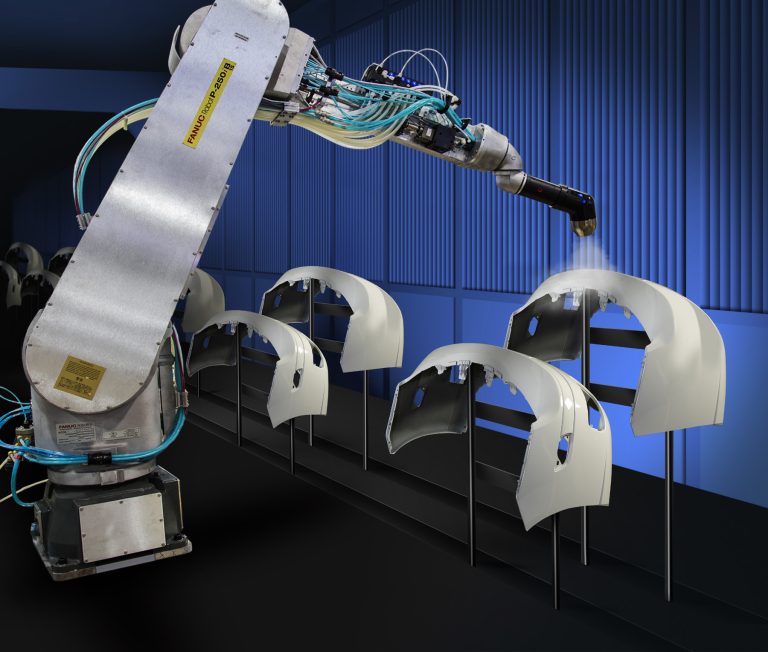
Image credit: automatedsolutions.com.au
Modern paint machines bring a organized motion and programmable precision to processes that previously relied on the operator’s technique. Manufacturers can eliminate inconsistencies like uneven film formation or excessive material consumption by automating spray path, speed, and angles for application. This leads to a coating process that is reliable and promotes First Time Quality.
Efficiency and consistency are the key to measurable results
Manual painting usually introduces variations in coverage and thickness because of human fatigue or minor differences in the technique. Paint robots eliminate that variation by repeating identical motion patterns throughout every production cycle. This level is repeatability allows for a uniform finish for all parts and an optimized distribution of material.
The transfer efficiency of advanced robotic paint systems has also been increased. The amount of paint that is sprayed over the surface is diminished when the distance and angle between the applicator’s component is maintained in a precise manner. Reduced material waste directly impacts costs, while reducing emission of volatile organic compounds supports efforts to ensure environmental compliance.
Paint robotics that incorporates fluid handling allows for exact mixing ratios when coatings are mixed composed of several components. This eliminates any inconsistentities that can compromise the integrity of the finished. Stable flow control combined with the ability to program parameters allow manufacturers to alter atomisation and spray patterns without disrupting production.
Productivity and safer working environments
The main benefit of implementing a paint robot lies in an increase in uptime. Paint cells that are robotic have a higher efficiency than manual operation since they work without interruption. Once programmed, they will maintain continuous throughput with no interruptions or constant supervision.
It is vital to think about safety when working in a facility that employs solvent-based or bi-component coatings. The atomisation of paint can lead to unsafe atmospheres, particularly when handling flammable or reactive substances. Modern paint robots are engineered for safe operation in demanding environments, helping reduce personnel exposure to harmful substances and improving workplace safety standards.
Conveyor track technology increases productivity further, allowing paint applications by robots as the parts continue to move. This allows for a larger working area, and also helps keep production lines running smoothly.
Australian Automation Expertise Supporting Industry
Access to automation partners who have experience is essential for companies who would like to modernize their finishing operations. In Australia, Automated Solutions has earned a reputation for delivering advanced robotic integration services. With extensive knowledge in automation engineering, the team operates as FANUC robotic integrators certified to assist companies in the implementation of custom robot paint solutions that are aligned with their business goals.
Combining technical knowledge with actual industry experience, Automated Solutions assists manufacturers in evaluating their existing methods and conceiving the most efficient robotic paint cells. Through collaboration in designing, simulation and system integration, facilities get an understanding of the expected performance enhancements prior to installation.
Adopting paint robotics is not just about automation, it is about measurable improvements in quality safety, efficiency, and productivity. Paint robotics that are well-engineered transform finishing on surfaces from a costly, time-consuming and insecure operation to an efficient, repeatable procedure. Manufacturers can increase their performance by collaborating with experts in automation who have the experience to help them achieve long-term success on the market that is getting more demanding.